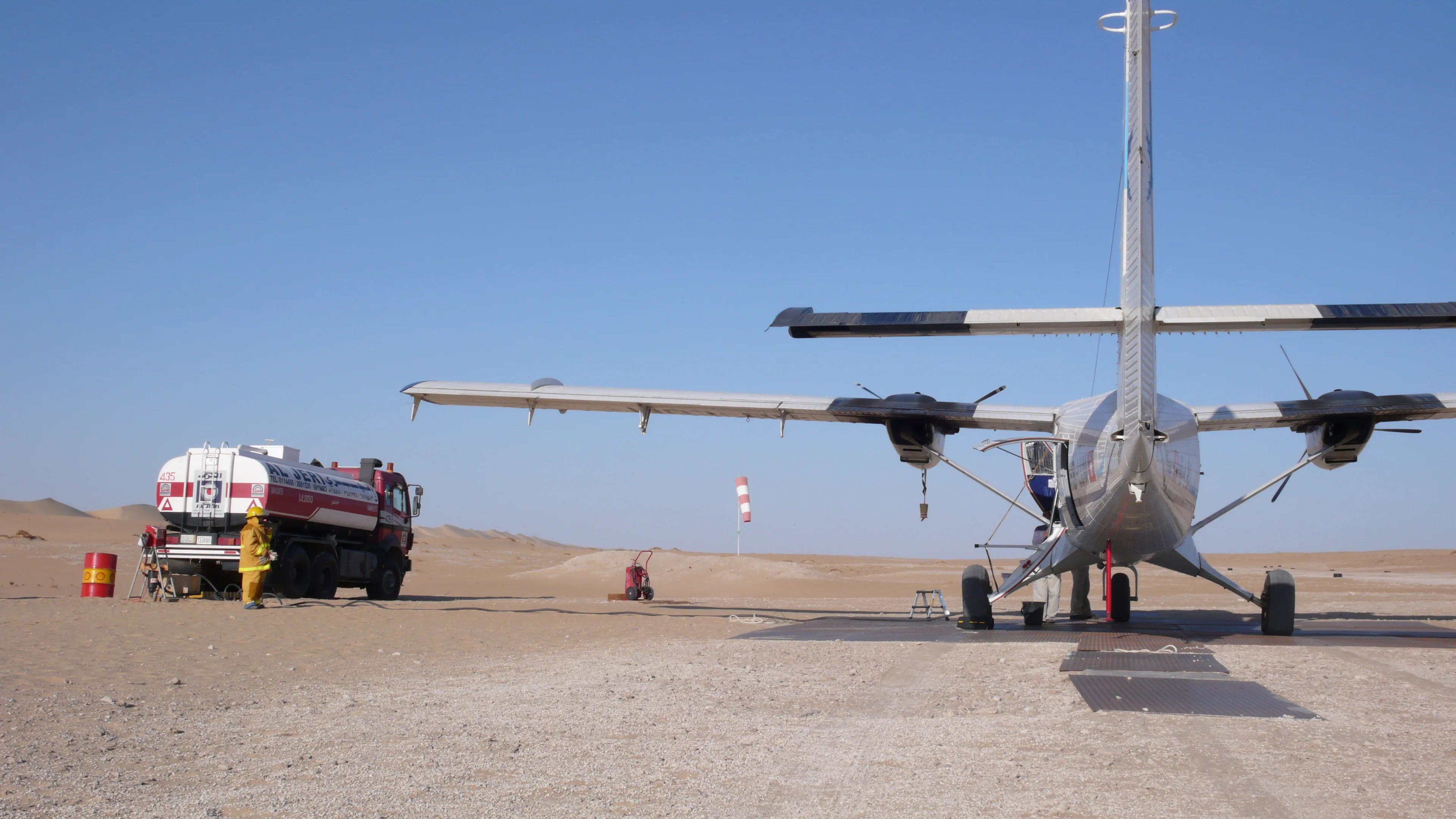
The backbone of Zimex since 1970
Twin Otter
Designed in 1965. Still hasn't found a strip it doesn't like.
- Passengers
- 19
- Payload
- ~2,000 kg
- Take-off
- 366 m
- Cruise
- 182 kt
- Lands on
- Wheels, floats, skis
de Havilland Canada DHC-6
Twin Otter
De Havilland Canada designed the Twin Otter in the 1960s for short, unprepared strips in the Canadian north. They built 844 before production stopped in 1988, and then the world kept asking for more. Production restarted in 2010, and Zimex took the first new one.
We fly three generations: the classic DHC-6-300, the DHC-6-400 with a Honeywell glass cockpit, and the new Classic 300-G with Garmin's G1000 NXi. Outside they're the same aircraft, with the same high wing, the same fixed gear and the same habit of stopping in less runway than most aircraft need to taxi.
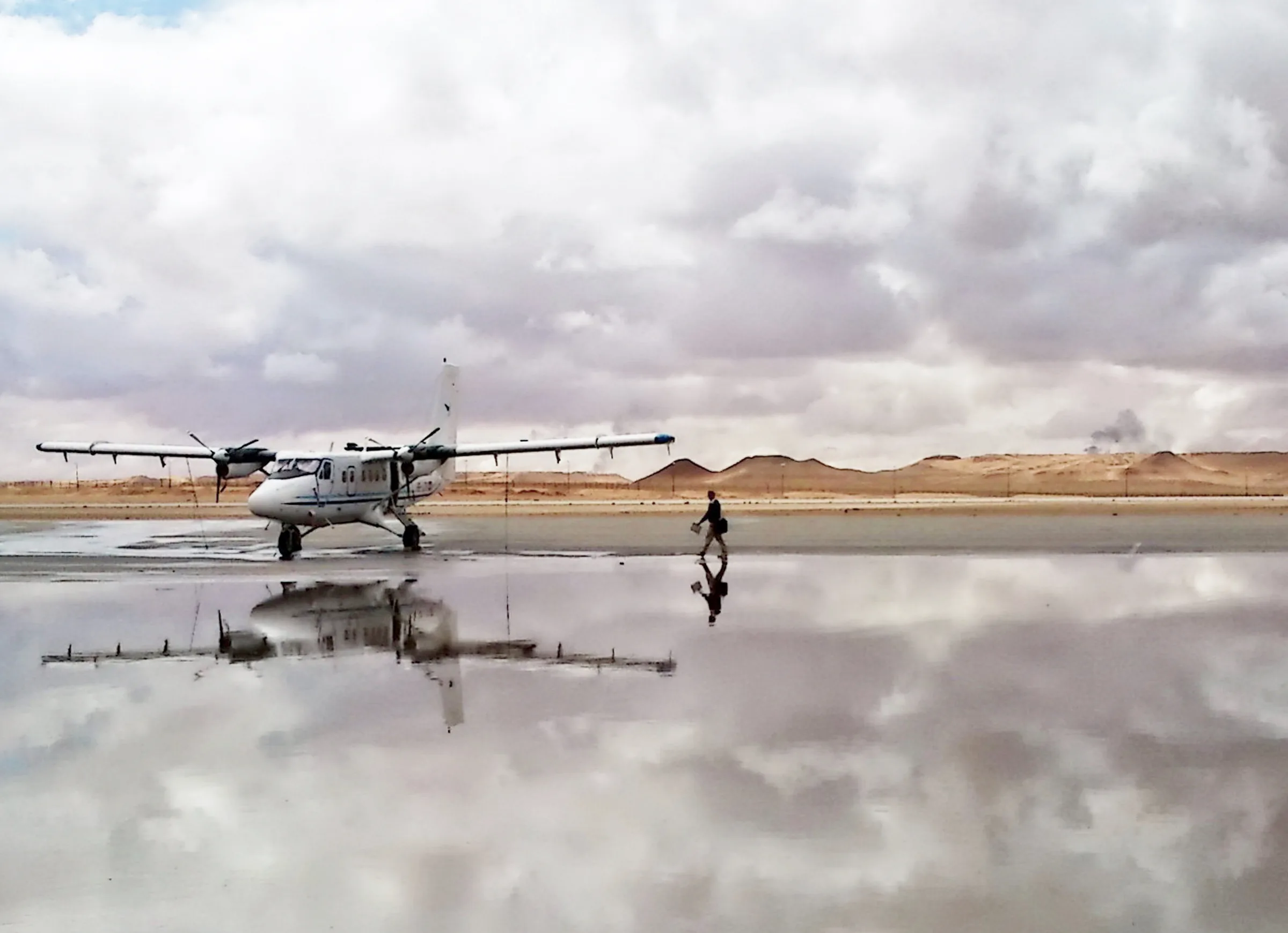
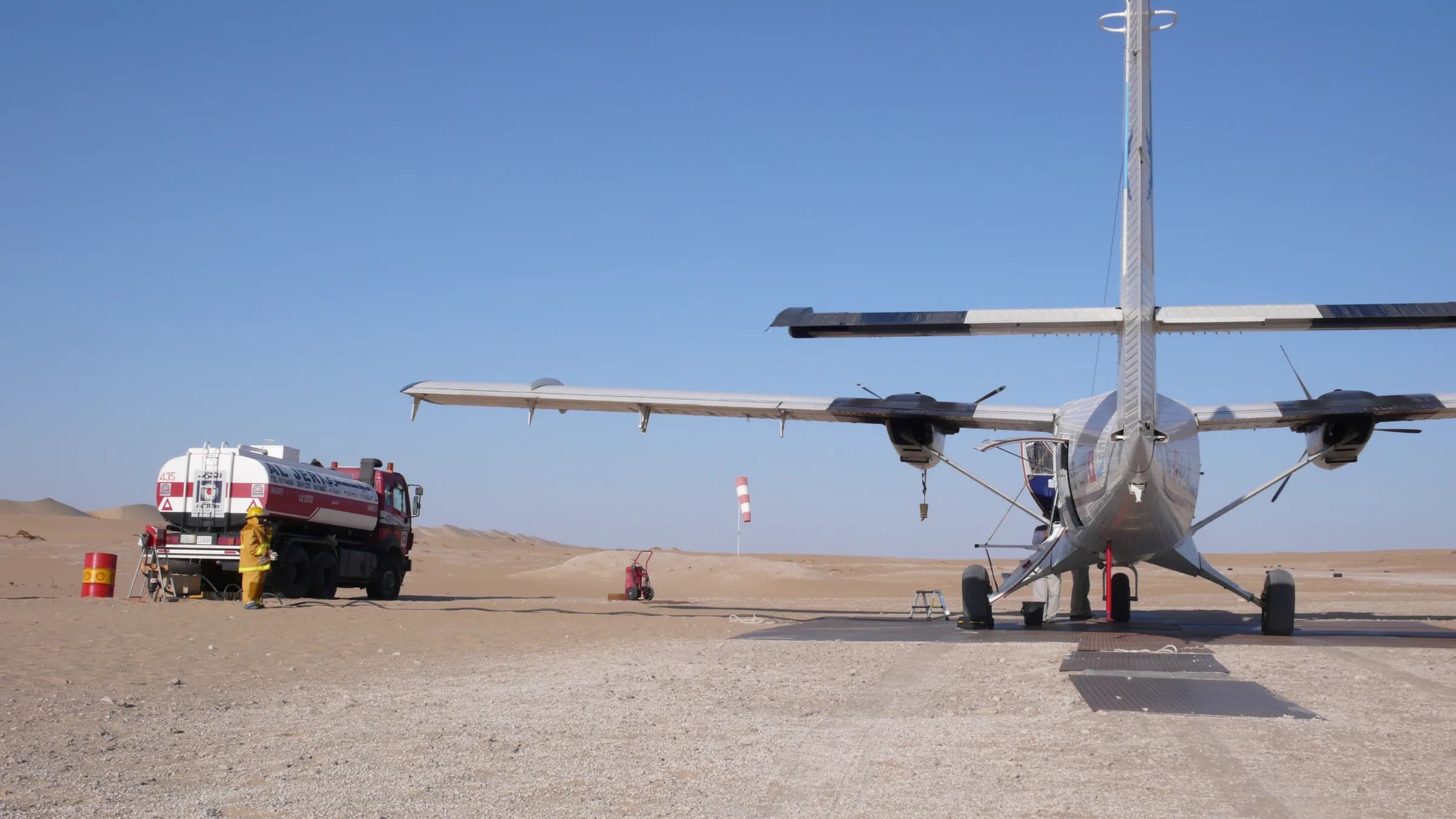
Short, rough strips
Landing over a 15 m obstacle takes 320 m. The strip can be gravel, grass or sand. Tarmac is appreciated, not required.
Six ways to land
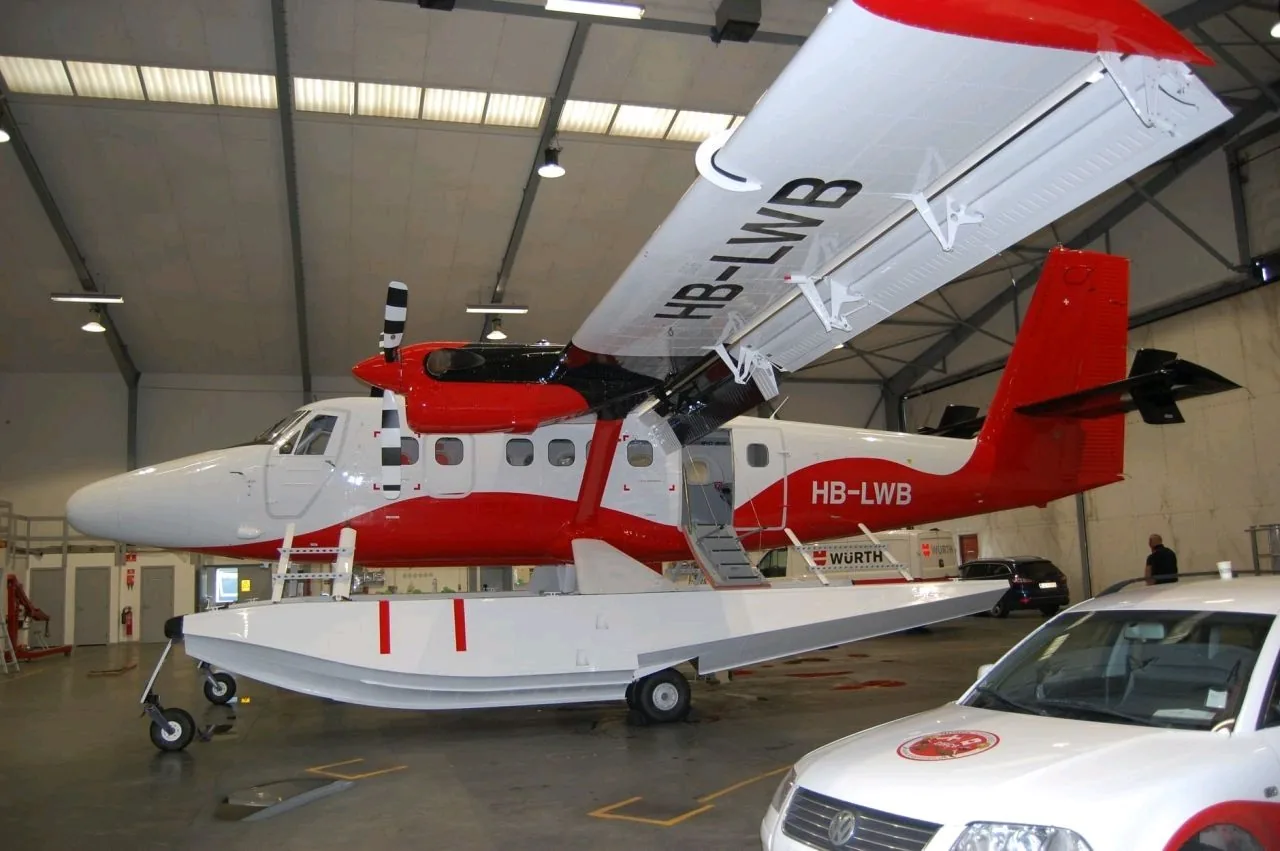
Wheels, straight floats, amphibious floats, wheel-skis, skis, or intermediate flotation gear: large low-pressure tyres for soft ground. All six are approved for the same airframe.
Hot and high
Its Pratt & Whitney PT6As are limited to 620 shp, so they have power in reserve. On the -34, full take-off power is available up to 42 °C at sea level.
Built to be kept flying
Simple systems, fixed gear, no pressurisation. We maintain ours at Altenrhein, where we're a de Havilland Canada factory-endorsed service centre.
Twin Otter
On board
The cabin
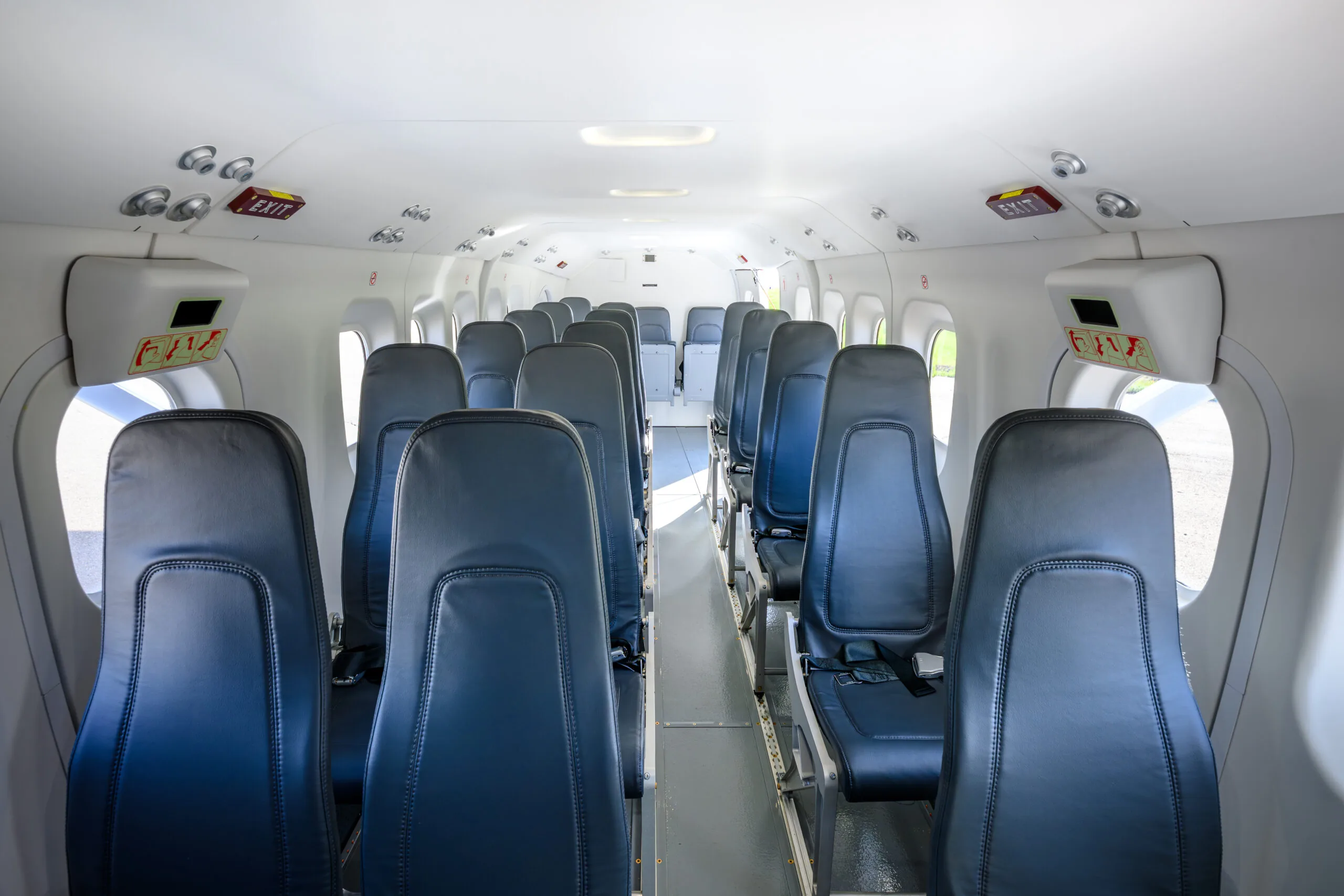
5.61 m long, 1.75 m wide and 1.50 m high: 10.9 m³ for 19 seats, or cargo, or a mix. Seats come out quickly, so passenger in the morning can be freight in the afternoon. We also fit it for medical evacuation, parachute drops and surveillance workstations.
The doors
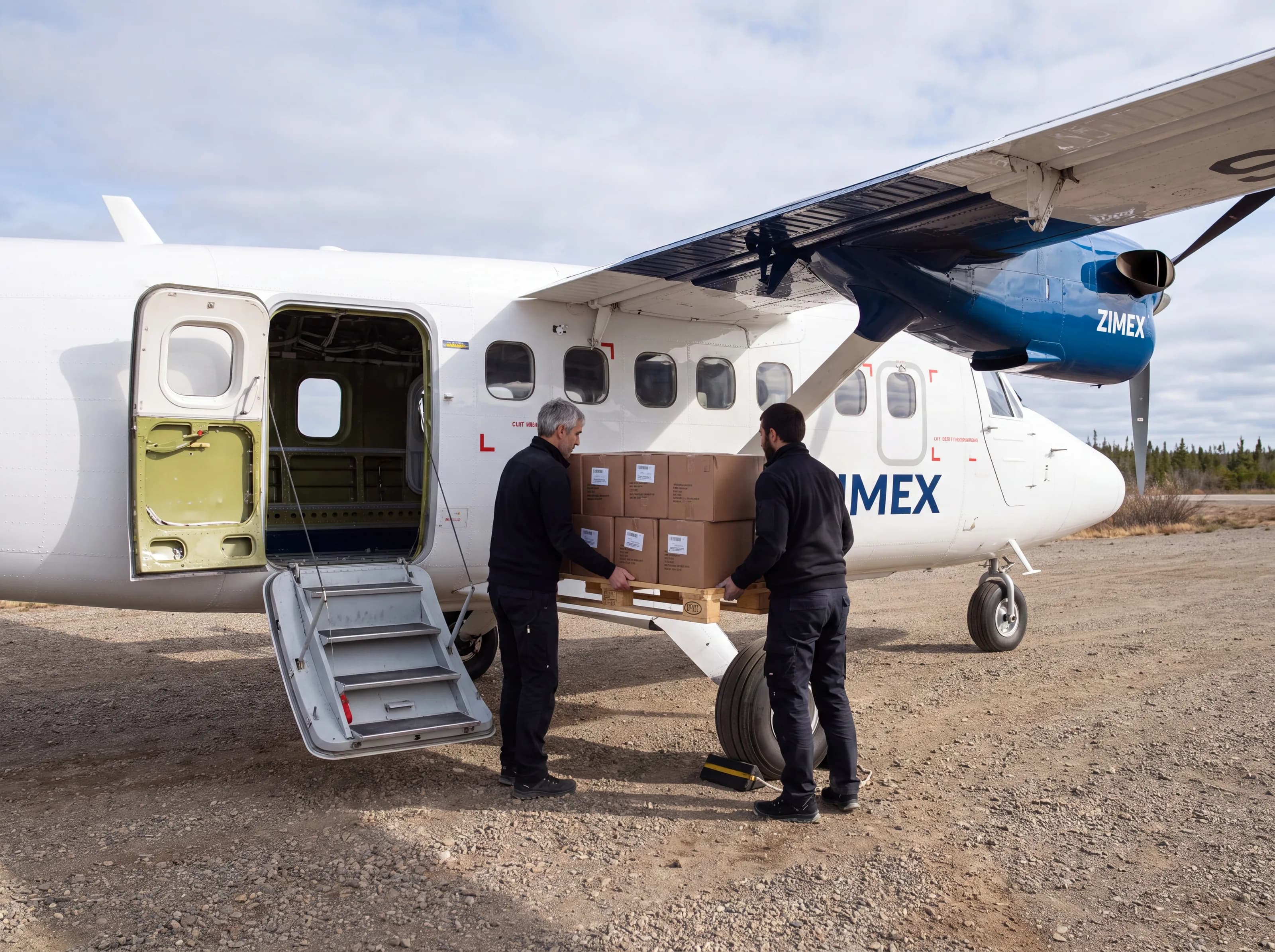
The left-hand door is 1.27 m wide and 1.42 m high. Its front half is an airstair, its rear half a double cargo door. A Euro pallet goes in without a fight. There's also a door on the right, and baggage space in the nose (1 m³) and the tail (2.5 m³).
Floats
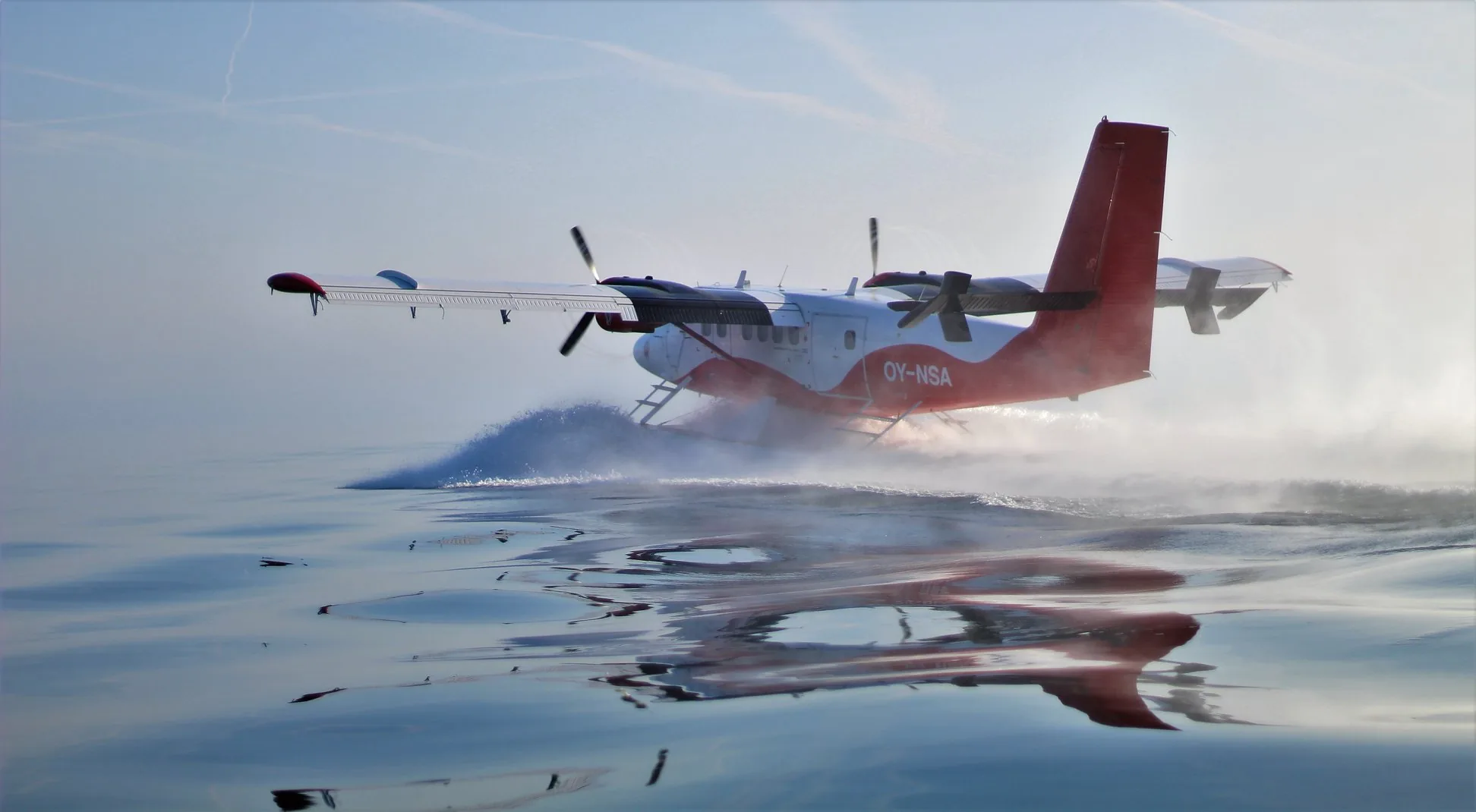
Amphibious Wipline floats add about 700 kg and 1 m of height. They also turn every lake, river and harbour into a runway. From water the Twin Otter clears 15 m in 599 m. Since 2017 we've been an EASA-approved float operator.
Range
From Altenrhein: 871 nautical miles.
That's the 300-G's range on standard tanks with a 45-minute reserve. With a tonne on board it's still 803 nm (1,487 km). Long-range tanks stretch it to 1,064 nm. For longer trips, Twin Otters island-hop. Ours has flown from Lake Constance to Tahiti in 12 legs.
Top view
Twin Otter
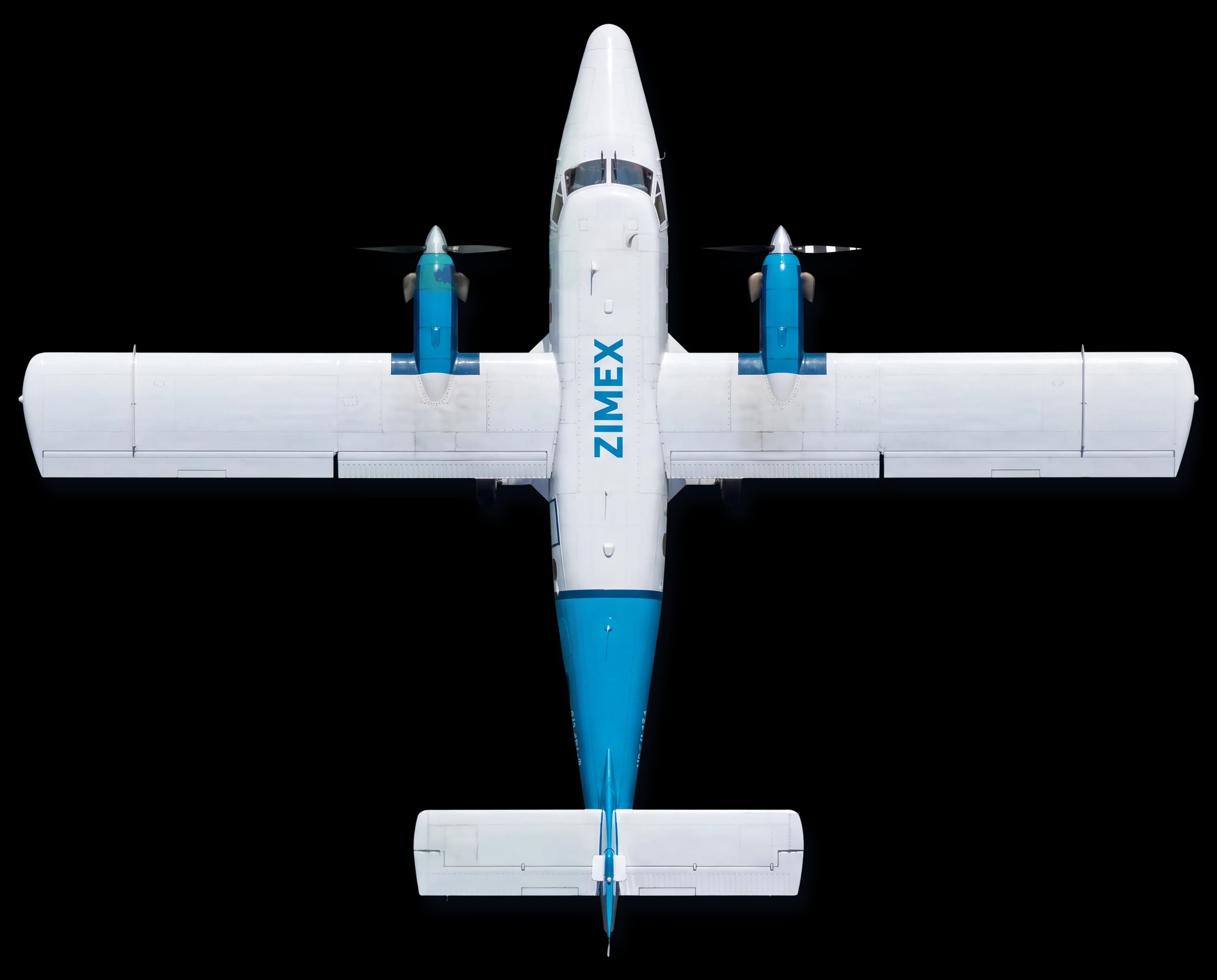
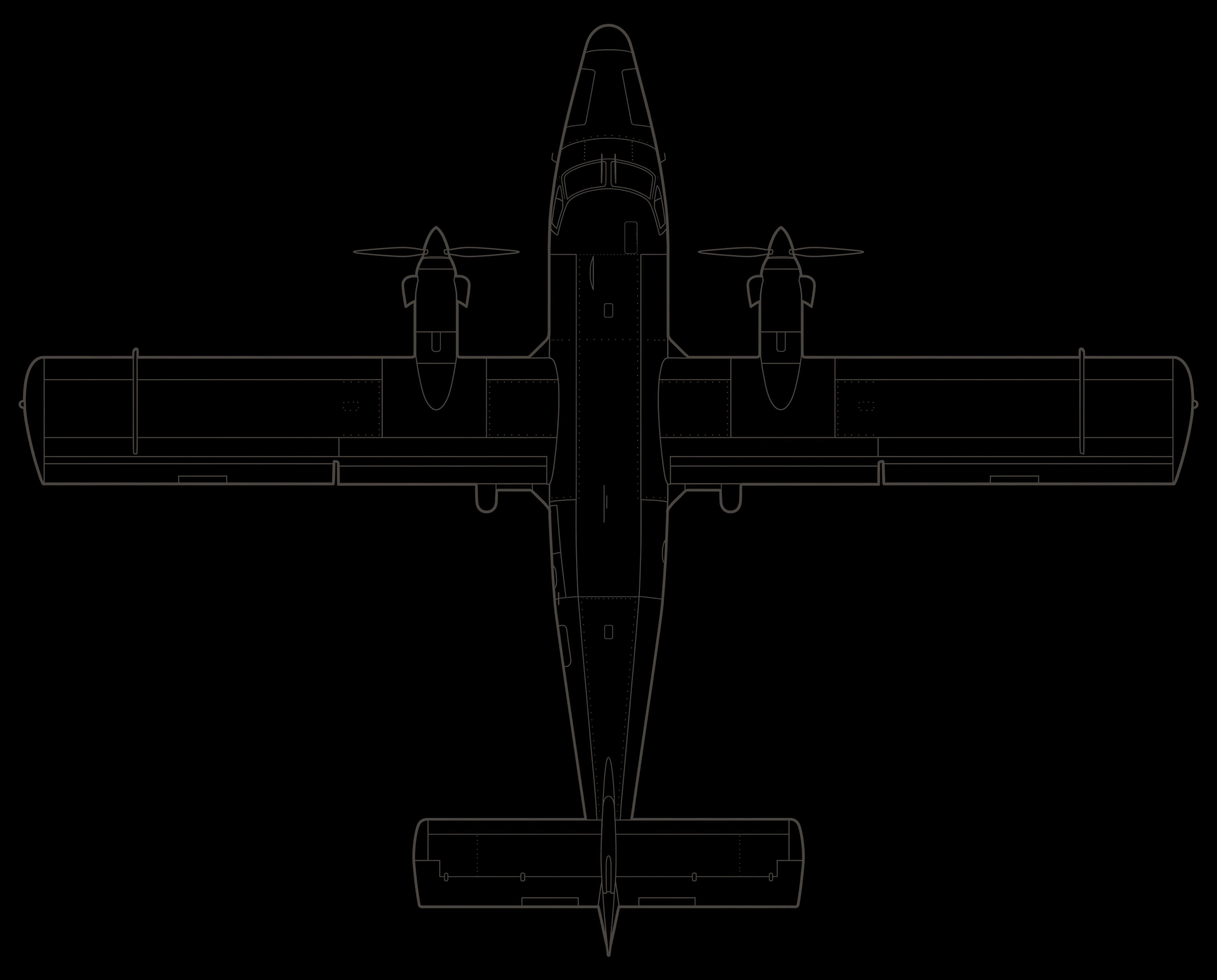
- Wingspan
- 19.81 m
- Length
- 15.77 m
- Height
- 5.94 m on wheels
de Havilland Canada DHC-6
Specifications
- Type
- de Havilland Canada DHC-6 Twin Otter (-300, -400, Classic 300-G)
- Crew
- 2 pilots (1 minimum)
- Passengers
- 19
- Landing gear
- Wheels · straight floats · amphibious floats · wheel-skis · skis · intermediate flotation gear
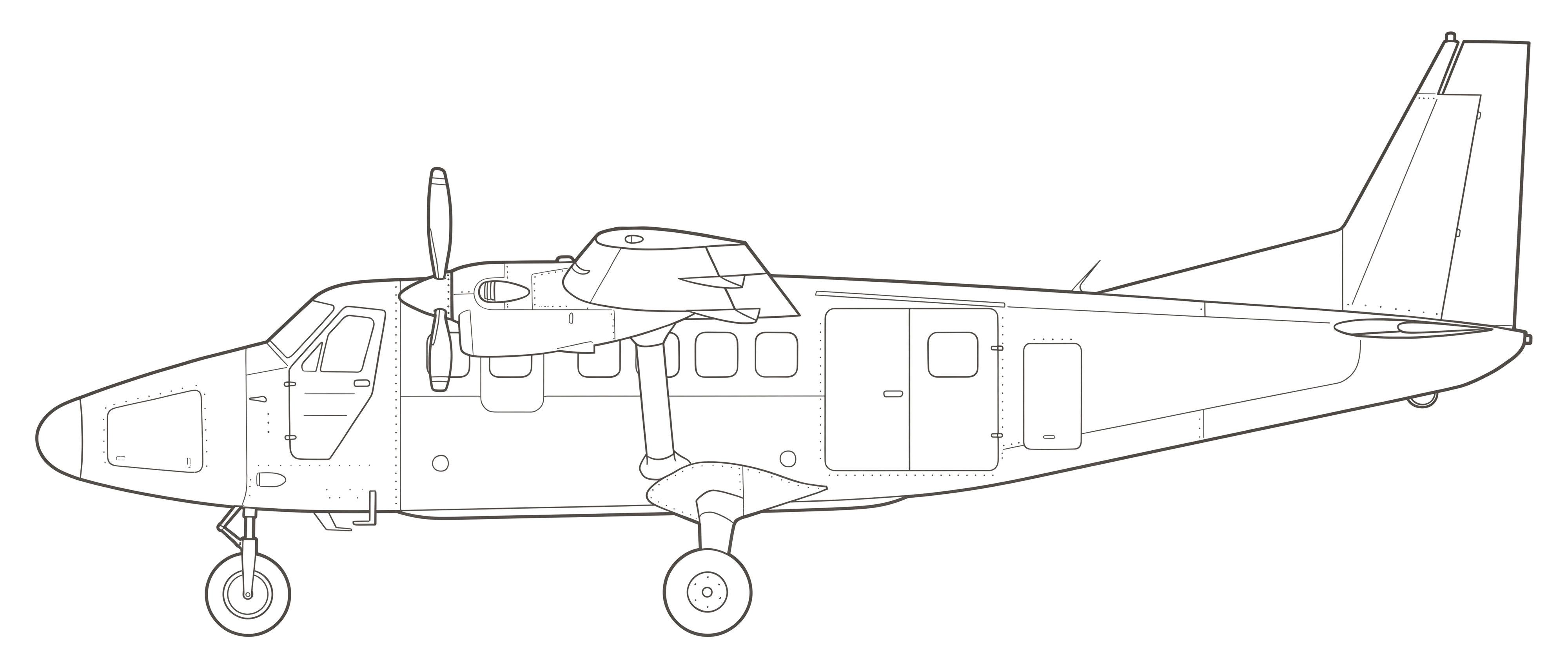
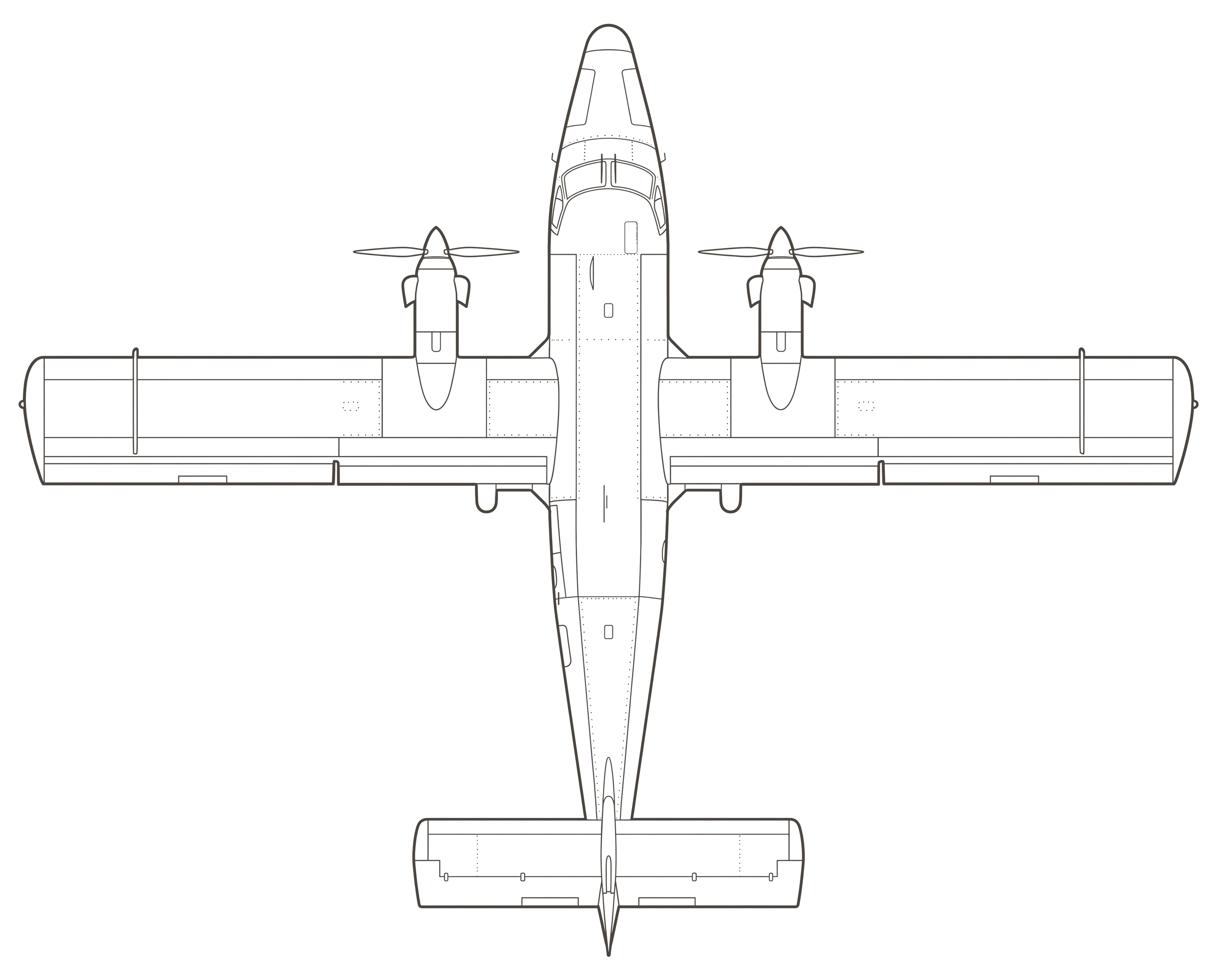
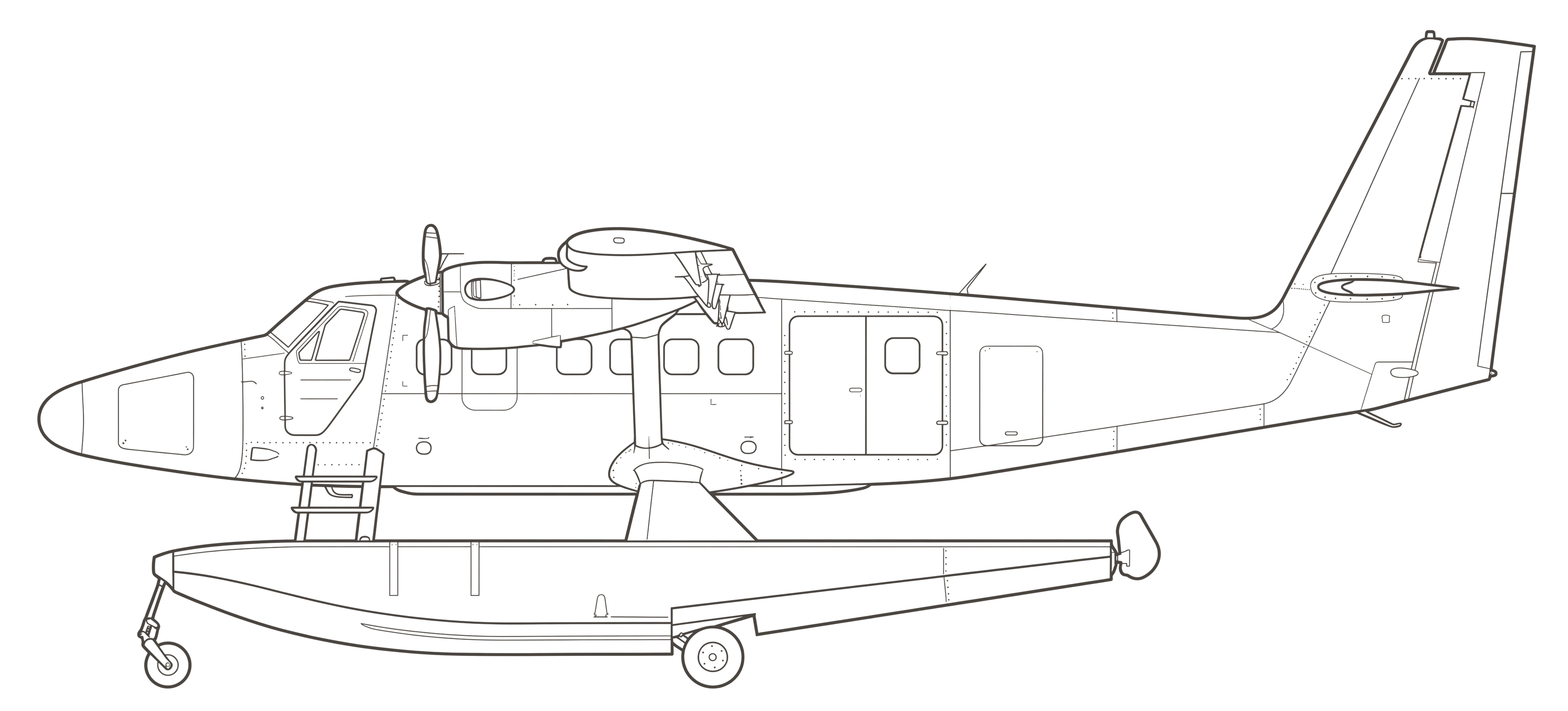
Dimensions, weights and performance are the manufacturer's published figures (de Havilland Canada, EASA type certificate). Performance is for the Classic 300-G on wheels unless noted. Real payload and range depend on configuration, temperature, altitude and runway.
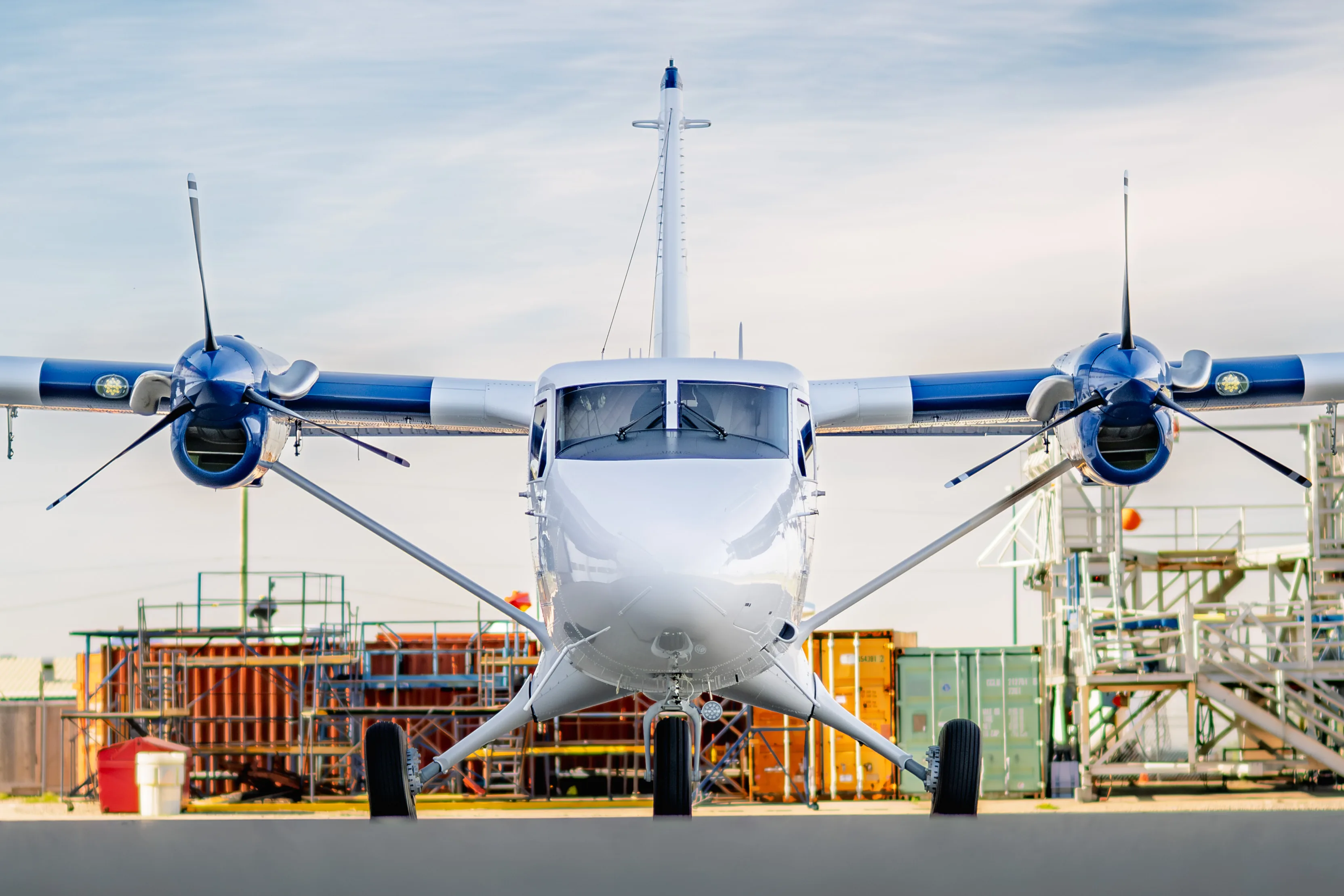
Registrations
Our aircraft
| Reg | Type | Built |
|---|---|---|
| HB-LUE | DHC-6-300 | 1969. The same year as Zimex. |
| HB-LUC | DHC-6-300 | 1973 |
| HB-LRR | DHC-6-300 | 1976 |
| HB-LAL | DHC-6-300 | 1976 |
| HB-LRO | DHC-6-300 | 1976 |
| HB-LQV | DHC-6-300 | 1979 |
| HB-LUB | DHC-6-300 | 1985 |
| HB-LUX | DHC-6-400 | 2010. The first Series 400 ever built. |
| HB-LAO | Classic 300-G | 2026. The first production 300-G. |
The other aircraft
Somewhere, something needs to be solved.
Tell us where.